Energy Fight - Dragon Fighters
MOONEE PUBLISHING LTDAction
4.6889.00 Reviews
- Version
- 2.5.12
- Installs
- 5.00M
- Age Rating
- Teen
Screenshots
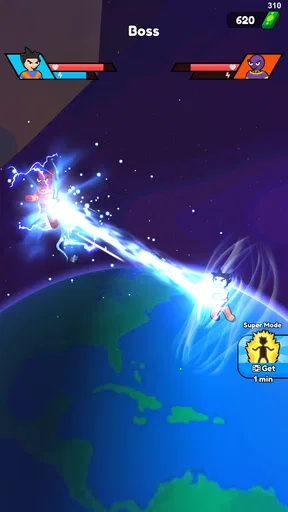
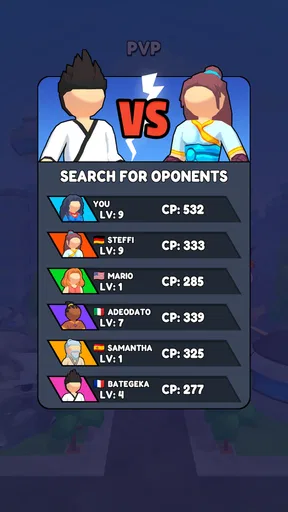
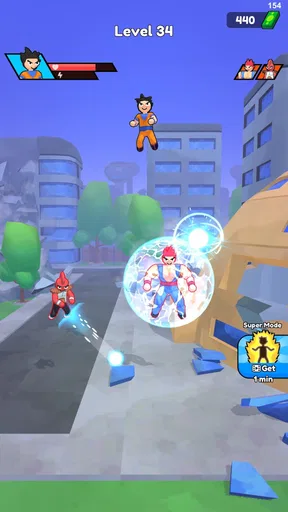
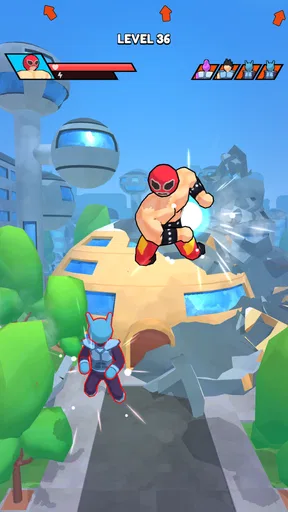
Our Review of Energy Fight - Dragon Fighters
 Analysis by Appyee
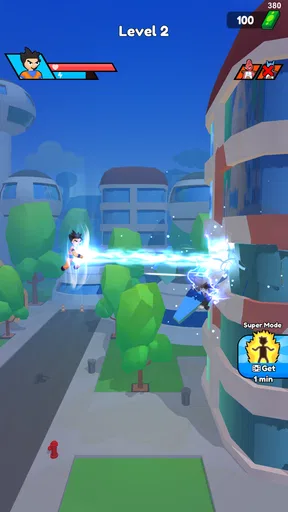
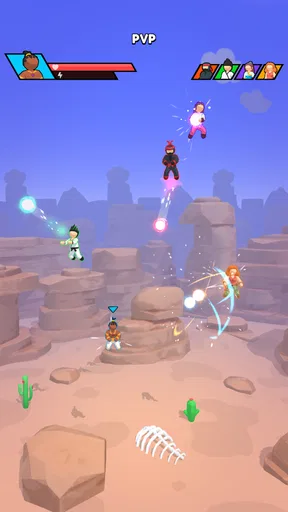
I spent time with Energy Fight - Dragon Fighters as a quick-action game built around movement, ranged attacks, and battles against dragon shadow warriors. It aims for immediate excitement rather than a long tutorial or a complicated role-playing system. You teleport around the arena, fire energy attacks, and try to survive encounters where standing still is usually a bad idea.
That simple premise is also the game’s main appeal. I could pick it up for a short session without first learning a large collection of menus or character statistics. At the same time, the action asks for more attention than the brief store summary suggests. Timing a teleport, choosing when to attack, and keeping enough space between my character and incoming enemies matter more than simply tapping as quickly as possible.
The game is free to download, and MOONEE PUBLISHING LTD presents it as an action title for a Teen audience. It has reached over five million installs and holds a 4.6 average from around twenty-one thousand ratings, which suggests that its quick combat loop has found a sizeable audience. Those figures do not replace personal experience, though. The real question is whether this particular style of short, energetic fighting suits the way you like to play.
How the current version feels in regular play
I focus here on how the current build holds up once the first burst of flashy combat has passed, and on the habits that make its movement-and-attack loop easier to read. I also consider what a returning player should reassess before settling into a routine, which leads naturally into the practical settings worth checking.
Fast battles with a clear first-minute appeal
The opening impression is easy to understand: move, attack, react, repeat. Teleporting gives the battles their identity. Instead of relying only on walking or waiting for an enemy to come close, I can reposition suddenly and create a safer angle for the next attack. The lightning-ball style of offense makes each encounter feel more active than a basic tap-to-hit game, especially when several threats make the arena feel crowded.
I found the best rhythm by treating movement as part of the attack rather than as an emergency button. A teleport is most useful when it changes the situation: escaping a dangerous approach, opening distance for a shot, or moving to a position where an enemy is easier to read. Using it constantly can make the action feel hurried and can leave me reacting without a plan. That is one of the first useful lessons for new players: mobility is powerful, but it works better when used deliberately.
The dragon shadow warrior theme gives the fights a stronger personality than an anonymous target practice setup. The enemies are not just obstacles placed in a blank arena; they establish the tone of the game and make the energy attacks feel appropriate. I would not describe the presentation as a deep fantasy adventure, but the visual idea is clear enough to support the combat without slowing it down.
Why the controls reward short sessions
This is the kind of game I would open while waiting for an appointment or taking a short break. Its central actions are easy to understand, so I do not need a long uninterrupted evening to enjoy it. A few battles can provide a satisfying burst of activity, particularly when I am in the mood for something more involved than a passive puzzle but less demanding than a large competitive game.
That convenience has a trade-off. Players who want a detailed campaign, extensive exploration, or a carefully layered character-building system may find the experience narrow. Energy Fight is strongest when judged as focused arcade-style action. It is less convincing if approached as a full-scale adventure with a large world to investigate.
The short-session design also makes it suitable for people who prefer learning through repetition. Each encounter gives me another chance to improve my positioning and recognize when an attack is worth taking. Rather than memorizing a long list of abilities, I can concentrate on the relationship between distance, timing, and teleportation. That clarity is helpful for casual players, although experienced action-game fans may eventually want more variety than this focused loop provides.
A practical approach to teleporting and ranged attacks
My most reliable approach was to avoid firing immediately whenever an enemy appeared. I first looked for the safest direction to move, then attacked once I had enough space to react. This sounds cautious, but it prevents a common mistake: spending attention on aiming or attacking while an opponent is already close enough to punish the decision.
Another useful habit is to avoid teleporting automatically after every hit. If the current position is safe, staying there briefly can make the next lightning-ball attack easier to control. Teleporting has greater value when it solves a problem, not merely when it is available. This small change in thinking makes the game feel less like frantic button pressing and more like a compact action challenge.
I also recommend playing with a clear priority. When multiple dragon shadow warriors are present, I focus first on the opponent creating the most immediate pressure rather than distributing attacks evenly. Removing the nearest danger can be more valuable than damaging a distant target. The game does not need a complicated strategy guide to benefit from this kind of decision-making; the arena itself creates enough pressure to make target selection meaningful.
What has changed by the current release
The current version is 2.5.12, while the game was released on June 19, 2023. That places the title beyond its initial launch phase and gives existing players a more established version to return to. In practical terms, I would treat the current build as the one that matters when deciding whether to start now, rather than judging it only by early impressions from its release period.
There is a useful distinction here. A later version can indicate ongoing maintenance and refinement, but a version number by itself does not prove that every personal frustration has been solved. I would still evaluate the game on what is visible during play: how comfortable the controls feel, whether the combat remains engaging after repeated sessions, and whether the available progression matches my expectations.
For someone who tried the game near launch and is considering returning, the current build is worth approaching with fresh expectations rather than assuming it is exactly the same experience. For a new player, the more important benefit is simpler: the game has had time to move beyond its first release and now presents itself through a mature version number. I would still avoid promising a specific transformation unless I could directly verify each change inside the game.
How the free model affects the experience
There is no purchase required to begin, which lowers the risk for curious players. I can test the combat, decide whether the teleport-and-shoot loop works for me, and stop without having committed money upfront. That is especially useful here because the game’s appeal depends heavily on personal taste. Some people will enjoy the direct action immediately; others will find the repeated battles too focused.
In-app purchases range from $0.99 to $99.99 per item. That broad span is important when deciding how to approach the game. I would recommend playing naturally before considering any optional spending, because the free starting experience is the only reliable way to learn whether the combat itself has enough staying power for you. A purchase cannot fix a mismatch between your preferred play style and the game’s core loop.
My advice is to set a personal spending boundary before browsing any optional offers. The low end may feel easy to justify, while the upper end represents a much more serious decision. Players who prefer games with a single upfront price, no temptation to buy extras, and a clearly finished structure may be more comfortable with a premium action title instead.
Who will get the most from it
I think this game is a good fit for players who want compact action with a strong emphasis on repositioning. If you enjoy watching enemy movement, choosing when to create distance, and improving through repeated attempts, the teleport mechanic gives you something concrete to practice. It is also approachable for anyone who wants a game that can be understood quickly without sacrificing all sense of timing.
It may work particularly well for a player who has a few spare minutes several times a day. For example, I can imagine opening it during a commute break, playing a handful of encounters, and putting it away without needing to remember a complicated quest chain. The game’s focused design supports that routine better than a large open-world adventure that expects longer sessions.
I would be more cautious about recommending it to someone seeking a deep narrative, cooperative teamwork, extensive exploration, or a highly technical competitive scene. Those expectations point toward different kinds of action games. Energy Fight is about the immediate feel of fighting and moving, not about replacing a full console-style campaign or a broad online battleground.
Where it sits beside familiar alternatives
Compared with a traditional fighting game, this title puts less emphasis on memorizing long move combinations and more on spacing, projectile timing, and sudden repositioning. That makes it easier to approach, but players who love frame-perfect combos or close-range duels may find the combat less expressive.
Compared with a bullet-heavy survival game, the teleporting gives me more direct control over escape and positioning. The experience feels less like simply enduring a screen full of danger and more like actively choosing where the next exchange should happen. On the other hand, anyone looking for a huge variety of weapons, characters, or build combinations may prefer a broader alternative.
Compared with a story-driven action role-playing game, the advantage is speed. I can reach the central activity quickly, with fewer layers between opening the app and fighting. The disadvantage is equally clear: players who measure value through world-building, dialogue, exploration, or long-term character development may not receive the same satisfaction here.
Small decisions that make a noticeable difference
One non-obvious strength is that the game encourages me to think about empty space. A clear area is not merely background; it is a resource that gives me time to react after teleporting. If I move toward a crowded section without a reason, I reduce my own options. Keeping an escape direction in mind before attacking makes the combat more controlled.
A second insight is that aggressive play is not always faster in practice. Firing repeatedly while ignoring positioning can lead to a more chaotic encounter, while one well-timed attack followed by a deliberate relocation can keep the situation manageable. This is useful for players who initially assume that an energy-based action game rewards constant offense.
A third trade-off concerns accessibility versus depth. The small set of immediately understandable actions helps newcomers get started, but it also means the game’s long-term appeal depends on whether those actions continue to produce interesting decisions. I would give it a fair trial over several sessions rather than deciding after one minute, but I would also recognize the warning sign if every battle begins to feel interchangeable.
There is a fourth practical point for returning users. When revisiting after time away, I would spend a session rebuilding familiarity with teleport timing instead of rushing into difficult encounters. Movement-based games often feel less comfortable after a break, and the quickest way back is to focus on safe repositioning before chasing faster victories.
Limitations I would want you to know first
The focused combat can become repetitive for players who need constant novelty. The dragon shadow warrior setting and lightning attacks establish a recognizable identity, but identity alone does not guarantee unlimited variety. If you usually stop playing when the central mechanic has been fully understood, this may be a short-term download rather than a lasting favorite.
The free-to-play structure may also affect how different players judge the experience. Even when the action itself is enjoyable, the presence of optional purchases can make some users more cautious. I prefer to separate those two questions: first decide whether the combat is fun without spending, then decide whether any optional item genuinely improves your experience rather than simply encouraging impulse buying.
The Teen content rating is another reason parents should consider whether the game suits a particular player, rather than assuming that a simple control scheme makes it appropriate for everyone. The rating provides useful context, but it does not describe an individual’s tolerance for action themes or spending prompts. A parent choosing it for a younger player should remain involved.
What existing and new players should watch next
For existing players, the current version gives a sensible reason to check back in, especially if the basic teleport-and-attack loop was already appealing. I would look for whether repeated sessions feel smoother and whether the game continues to offer meaningful reasons to improve positioning. The most valuable evolution would be anything that deepens decision-making without burying the quick access that makes the game attractive.
For new players, I would watch my own reaction after the novelty of the lightning attacks fades. Do I still enjoy choosing when to teleport? Do I feel that mistakes teach me something, or do encounters simply blur together? Those answers are more useful than popularity alone when deciding whether to keep the game installed.
I would also pay attention to how comfortable the game remains on my device over longer sessions, particularly if I prefer playing frequently rather than occasionally. I am not treating that as a guaranteed problem; it is simply a sensible part of evaluating any action game whose appeal depends on quick reactions and repeated play.
My recommendation after playing
Energy Fight - Dragon Fighters works best as a free, focused action game for people who enjoy short battles built around movement and ranged pressure. I like that teleporting is not just decoration: it changes how I think about distance, safety, and attack timing. The game is easy to approach, yet it rewards a more thoughtful style once frantic tapping stops being effective.
I would recommend trying it if you want something energetic that can fit into a short break, especially if you enjoy improving through repetition instead of following a large story. The current version, 2.5.12, makes it a reasonable starting point for newcomers and a useful return point for former players. Its strong audience response, including a 4.6 average and more than five million installs, reinforces that the concept has broad appeal, but your own tolerance for repetition matters more.
I would skip it if you are specifically searching for a deep campaign, a complex fighting system, or a completely purchase-free premium experience. Those are not minor preferences; they define a different kind of game. For everyone else, the sensible approach is to download it for free, learn to use teleportation as a planned tool, and judge the experience after several short sessions rather than after the first flashy attack.
My final view is positive but measured. The game has a clear identity, a useful movement mechanic, and an accessible action loop. Its main weakness is that the same focus that makes it easy to start may limit how long it holds the attention of players who need broad progression or constant change. If you are comfortable with that trade-off, this is a lively little action game that earns its place as a quick pick-up-and-play option.
Verdict
Strengths of Energy Fight - Dragon Fighters
- Fast-paced battles are easy to start, even for casual players.
- Dragon-themed fighters offer appealing variety in combat styles.
- Short matches work well for quick gaming sessions.
- Upgrade systems give battles a steady sense of progression.
- Bright effects and animations make attacks satisfying to watch.
Limitations of Energy Fight - Dragon Fighters
- Progress may slow down when stronger upgrades require more resources.
- Repeated battles can feel grindy after the initial excitement.
- Some fighters or features may take considerable time to unlock.
- Combat depth may feel limited for experienced fighting-game fans.
- Frequent effects can make the screen feel visually crowded.
Other Releases by MOONEE PUBLISHING LTD
View All
Find the Alien - Alien Game
Casual4.5

Mechangelion - Robot Fighting
Casual4.6

Elemental Gloves - Magic Power
Arcade4.6

Monsters Gang 3D: beast fights
Action4.6
Similar Picks in This Category
View All
Temple Run 2: Endless Escape
Imangi Studios4.1

PUBG MOBILE
Level Infinite4.3

Free Fire: 9th Anniversary
GARENA INTERNATIONAL I4.4

Talking Tom: Hero Dash Run
Outfit7 Limited4.3

slither.io
Lowtech Studios3.9

Sniper 3D:Gun Shooting Games
Wildlife Studios4.6
Frequently Asked Questions
What is Energy Fight - Dragon Fighters?
Energy Fight - Dragon Fighters is an action fighting game centered on powerful martial-arts battles, energy attacks, and dragon-themed fighters. Players can usually choose a character, face opponents in fast-paced matches, and improve their combat performance through progression. Its appeal comes from combining simple fighting controls with spectacular special moves and a style inspired by classic anime combat adventures.
How does the gameplay work in Energy Fight - Dragon Fighters?
The game focuses on short battles where timing, movement, attacks, and energy-based abilities are important. Depending on the mode and character, you may need to combine basic strikes with defensive actions and special techniques to defeat opponents. New players should spend time learning each fighter’s attack range and ability timing, because repeatedly using powerful moves without strategy can leave the character vulnerable.
Can Energy Fight - Dragon Fighters be played offline?
Offline availability may depend on the specific version of the game and the features being used. Basic gameplay modes can sometimes work without a constant connection, while advertisements, online events, rankings, updates, or other connected features may require internet access. It is best to launch the game once while connected and check which modes remain available after disabling Wi-Fi or mobile data.
Is Energy Fight - Dragon Fighters free to download and play?
The game may be available as a free download, but free access does not always mean that every feature is completely unrestricted. Mobile games commonly include advertising, optional purchases, unlockable fighters, upgrade resources, or other progression-related items. Before downloading, review the store listing for current information about ads, in-app purchases, supported devices, and any age or account requirements.
What should I check before installing Energy Fight - Dragon Fighters?
Before installation, verify that your Android or iOS device meets the game’s current requirements and has enough free storage for the app and future updates. Also check the latest store reviews, requested permissions, privacy information, and whether the game is officially supported in your region. A stable internet connection is recommended for the first launch, updates, advertisements, and any online-related features.
Play our best games!


